
Design
Why Neo-Classical Architecture Works in the Himalayan Foothills
Proportion, symmetry, arched openings and honest materials — the design logic behind the villa elevations at Ganga Vana Villas.
Ganga Vana Villas Editorial ·
Neo-classicism is often used as a shortcut to look expensive. Done properly it is the opposite — a discipline of restraint.
Proportion before ornament The language rests on symmetry and ratio: openings that align, masses that balance, a roofline that resolves. When those are right, very little decoration is required. When they are wrong, no amount of moulding rescues the elevation.
Why it suits this landscape The Himalayan foothills are visually busy — layered ridges, dense forest, changing light. A restless facade competes and loses. A calm, symmetrical elevation with arched openings and a stone-finished surface holds its own quietly and lets the setting stay the subject.
Materials that age honestly Stone finishes, plaster, hardwood, powder-coated aluminium and toughened glass weather rather than degrade. In a monsoon climate, that distinction decides how a house looks in year ten.
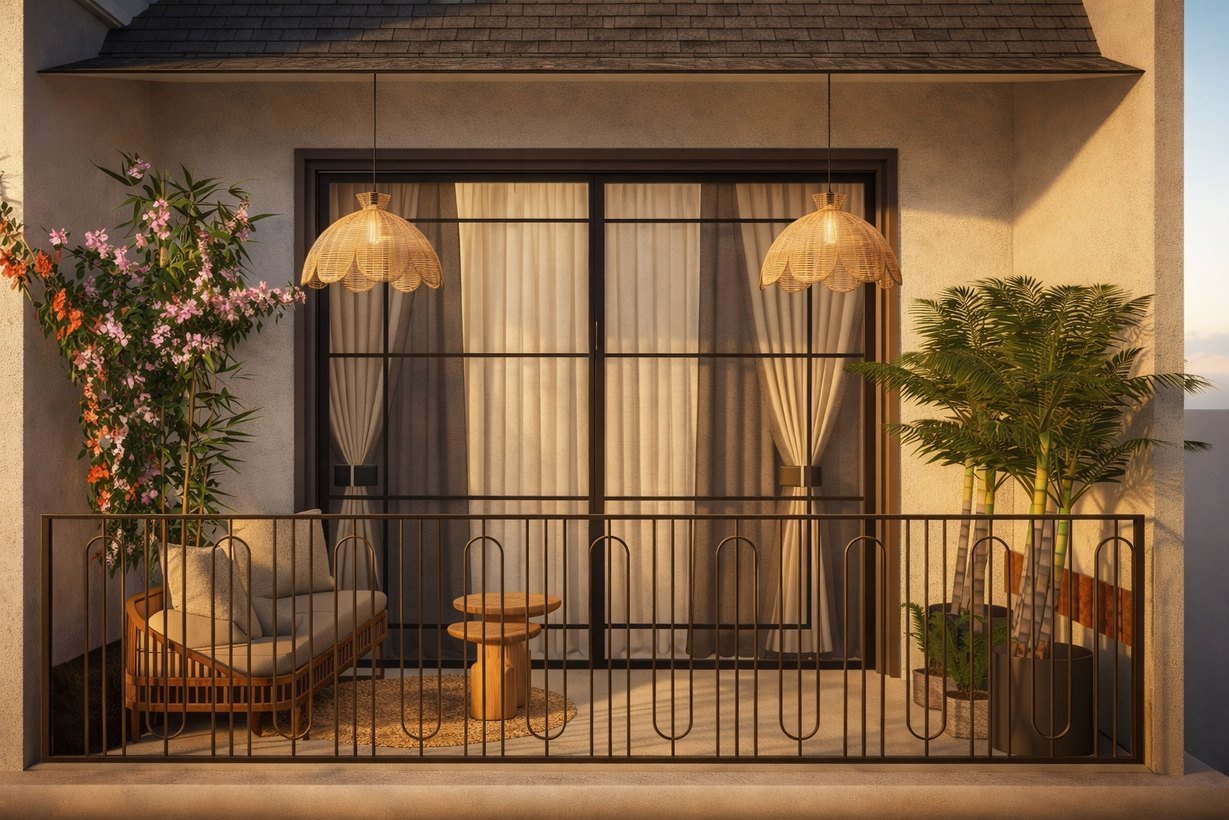
Light as a design material Deep arched openings and pitched roofs generate shadow that shifts through the day, so the facade reads differently at nine in the morning and five in the evening. Soft ambient lighting after dusk picks out the mouldings without floodlighting the building.
A single language across the community Along the internal boulevard at Ganga Vana Villas, every villa speaks the same architectural language. The result is a street that reads as one composition instead of a row of unrelated houses — the difference between a neighbourhood and a subdivision.
Carried inside The same restraint continues in the interiors: subtle arches, clean lines, layered textures, and an open living and dining volume that keeps light moving. Luxury, in this reading, is how naturally everything fits together.
- architecture
- neo-classical
- design
Come and see the site
Walk the plots, see the river edge and the forest line, and understand why Chilla is different. Our team will arrange the visit.